Artist Statement
We live in an era of unprecedented visual abundance shaped by generative AI and data-driven technologies. While these systems can rapidly produce convincing images, they remain constrained by the datasets on which they are trained, often failing to fully represent lived human experiences that are absent or marginalized within those data. As synthetic imagery circulates at increasing speed, trust in the visual field becomes unstable, raising urgent questions about representation and reality.
My work revisits the longstanding tension between images and truth—a concern central to aesthetic theory since Plato’s Allegory of the Cave—and reconsiders it within contemporary AI-driven culture. I argue that art, when grounded in verifiable data and material decision-making, can function as a form of fact-checking, and that traditional art forms can reveal human conditions that we care about. Rather than distancing us from reality, art can render complex social and scientific conditions visible and legible.
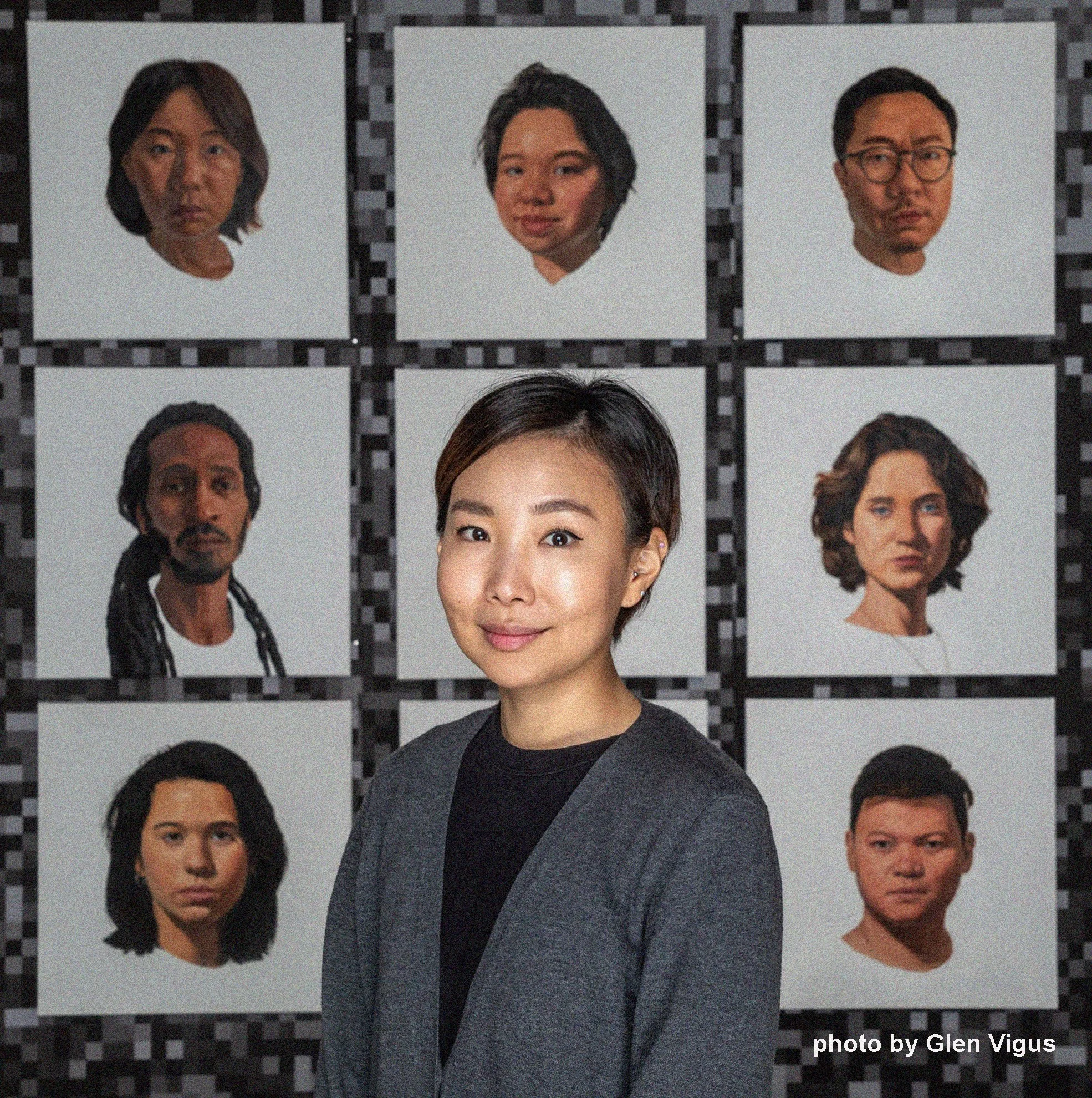
Extending this approach in practice, I am currently translating political and social survey data into fragmented visual structures layered onto portraits, examining national identity and belonging. Across my work, painting becomes a critical site where data and lived experience coexist within post-truth visual culture.